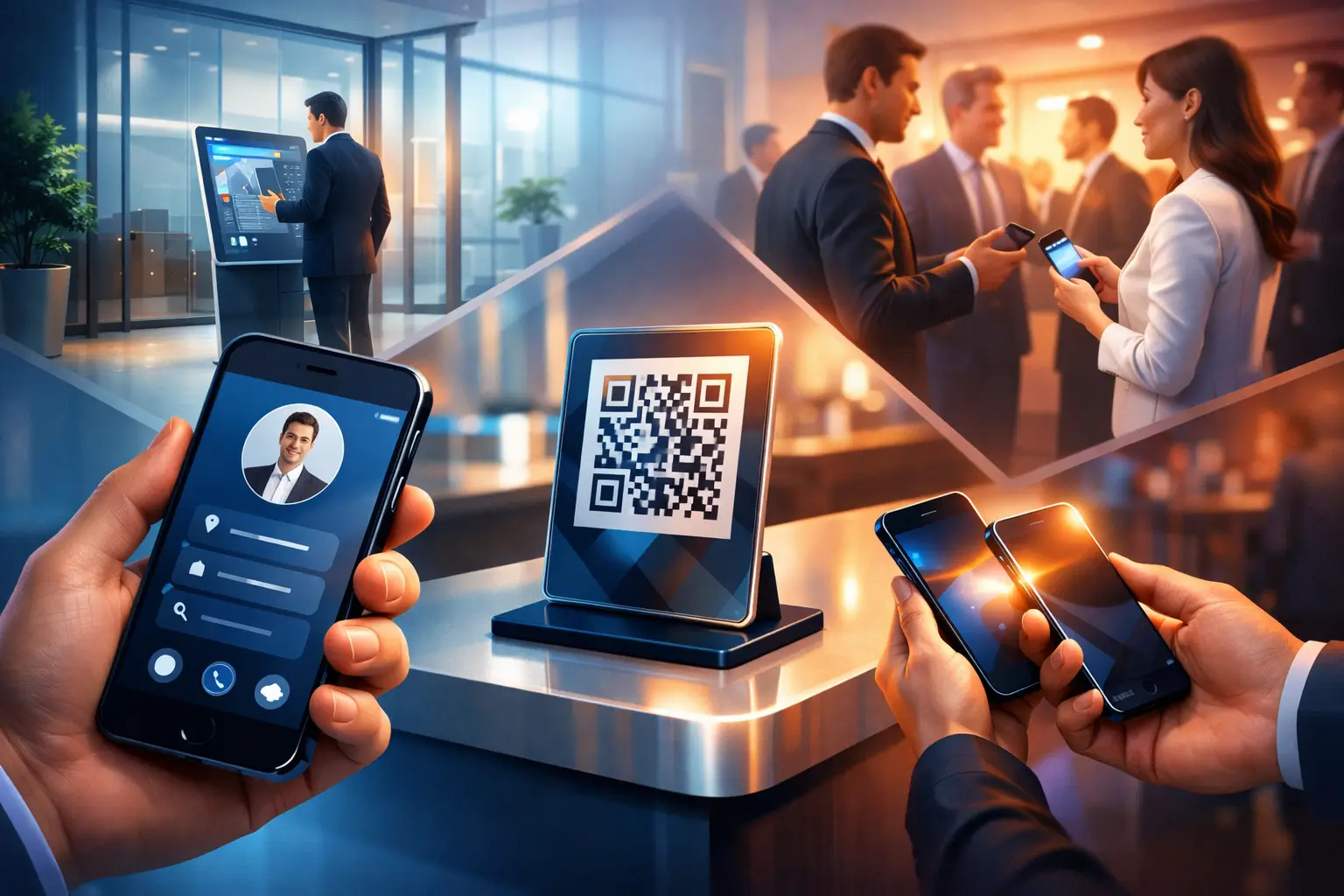
A paper card gets stale the moment your title changes, your phone number updates, or a prospect loses it in a jacket pocket. A smart QR business card fixes that problem by turning a one-time handoff into a live digital touchpoint. Instead of hoping someone manually saves your details later, you give them an instant, mobile-friendly experience they can actually use.
That shift matters more than most teams realize. Business cards are not just about contact exchange anymore. They sit at the intersection of brand perception, speed, lead capture, and follow-up. If your company still relies on printed cards alone, you are leaving too much to chance.
What a smart QR business card actually does
A smart QR business card is more than a QR code printed on cardstock. The real value comes from what happens after the scan. Instead of opening a static page with limited information, the code connects people to a digital profile that can be updated anytime, personalized by use case, and built to drive action.
That profile can include core contact details, company information, social channels, scheduling links, portfolio content, location details, and direct paths to call, message, or save contact information. or sales teams, executives, and client-facing staff, that means fewer dead ends and fewer missed opportunities.
The difference is subtle but significant. A standard business card says, here is my information. A smart card says, here is the best next step.
Why a smart QR business card performs better than print alone
The strongest case for digital cards is not novelty. It is performance.
Printed cards are easy to hand out, but they create friction afterward. Someone has to keep the card, read it later, type in the details correctly, and decide to act. At each step, interest drops. A QR-based experience reduces that gap. One scan can save contact information, open a product page, start a conversation, or direct a lead to the right resource immediately.
There is also the issue of accuracy. Printed cards freeze your details in time. If your role changes, your calendar link updates, or your company rebrands, old cards keep circulating with outdated information. A smart QR business card keeps the front-end interaction consistent while letting you update the destination behind it.
or organizations, the upside is even bigger. Brand consistency improves when every employee shares the same quality of digital identity. Marketing gets a more controlled presentation. Sales gets a faster handoff. Operations spends less time dealing with outdated assets.
Where smart QR cards create the most value
Not every business uses contact sharing the same way, so the best setup depends on context.
or executives and public-facing professionals, the card works as a premium digital identity. It can combine contact details, social profiles, media appearances, booking links, and company information in one place. That matters when people meet you at conferences, media events, investor meetings, or networking sessions and need an easy way to stay connected.
or sales teams, speed matters most. A rep should be able to meet someone, get scanned, and move that person toward a meeting request, product page, or direct message without asking them to search later. In this case, the card should be built for response, not just presentation.
or service businesses and physical locations, the use case expands beyond personal networking. A QR business card can direct customers to support, reviews, booking, directions, or a business profile. The interaction becomes more useful because it solves the next need right away.
At conferences and trade shows, the value is even clearer. Traditional cards pile up fast and are hard to sort once the event ends. A smart card gives attendees, exhibitors, and organizers a cleaner way to connect and follow up. It reduces manual entry and makes every interaction easier to track.
The features that matter most
Not all digital cards deliver the same business value. The best ones are built around outcomes, not decoration.
irst, the destination should be dynamic. If you cannot update the content after the QR code is shared, you are still dealing with a static asset. Second, the experience should look professional on any device. A clunky mobile page weakens trust fast.
Language flexibility also matters more than many companies expect. If your team meets clients, partners, or visitors across regions, automatic language detection can remove friction immediately. A card that adapts to the user feels more relevant and more usable from the first scan.
Analytics are another practical advantage. A printed card cannot tell you when it worked. A digital one can show engagement patterns, help you understand which profiles get scanned, and reveal whether people are taking the next step.
If you are evaluating platforms, look for a system that supports live updates, branded presentation, multilingual access, and a structure that fits your business rather than forcing you into a generic profile template. That is where solutions like OneContact's smart QR business card stand out - not because they digitize a card, but because they turn contact sharing into an active business channel.
Smart QR business card strategy for teams
A smart QR business card works best when it is treated as part of your commercial workflow, not as a design add-on.
Start with role-based thinking. A founder, recruiter, account executive, and event manager do not need identical card destinations. They may need the same brand structure, but the call to action should reflect the job. A recruiter might prioritize open roles and direct contact. A salesperson might push meeting booking. A customer success lead might highlight support access and renewal conversations.
Then think about where the QR appears. It can live on a printed card, email signature, booth display, presentation slide, badge, packaging insert, office signage, or even building entry points. The same digital identity can support multiple moments, which increases the return on a single setup.
Governance matters too. Companies often underestimate how messy digital identity becomes when every employee builds their own version. A controlled platform helps standardize branding, permissions, and updates while still allowing enough flexibility for different teams.
What to avoid when choosing a solution
The biggest mistake is choosing based on the QR code itself instead of the experience behind it. A QR code is just the gateway. If the landing experience is weak, the card will not perform.
Another common mistake is overloading the profile. More links do not automatically create more value. If every button competes for attention, people take none of them. The best smart cards are selective. They present the right information in the right order.
It is also worth being realistic about adoption. If your team needs training just to share a card, the tool is too complicated. The experience should be simple for employees and immediate for the person scanning.
inally, watch for tools that solve only one narrow use case. If your organization also manages events, visitors, or office interactions, a disconnected point solution can add complexity later. In many cases, it makes more sense to use a platform that supports digital identity as part of a broader engagement system.
The business case is stronger than it looks
Some teams still see digital cards as a modern replacement for print. That is too small a view.
A smart QR business card improves how your company appears in live interactions, but the bigger gain is operational. It shortens the path from introduction to action. It keeps employee information current. It creates consistency across departments. It gives marketing and leadership more control over how the brand is represented in the field.
There are trade-offs, of course. Some people still like the feel of a printed card, and in certain settings, physical handoffs remain useful. The best approach is often hybrid: keep the printed card if it fits your market, but make the QR experience the real destination. That way, the card becomes a trigger for engagement rather than a fragile piece of information someone may never use.
or companies that care about measurable outcomes, that shift is hard to ignore. very scan can become a contact save, a meeting, a support request, a visit, or a lead. That is a better use of a business card than hoping someone remembers to type in your email later.