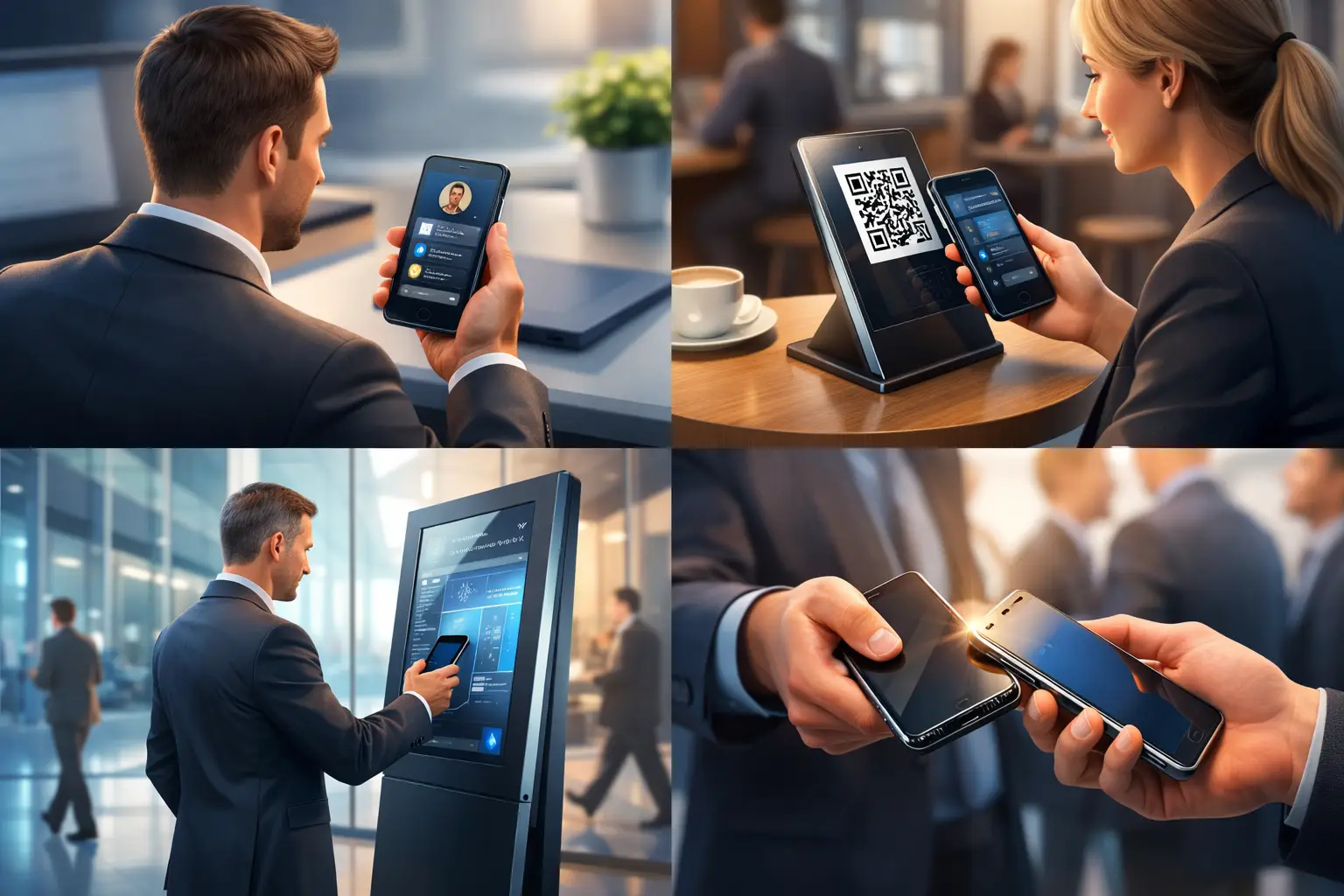
You meet someone valuable, exchange details, and two hours later your paper card is buried in a pocket, lost in a tote bag, or typed manually into a phone with mistakes. That gap is exactly why people ask מהו כרטיס ביקור חכם - what is a smart business card, and why are so many professionals replacing paper with it?
A smart business card is a digital identity tool that lets you share your contact details, company information, social profiles, booking links, portfolio, and calls to action through a QR code, tap, or personal landing page. Unlike a printed card, it is not frozen the moment you hand it over. You can update it anytime, track engagement, and tailor it to the way people actually connect today.
or executives, sales teams, exhibitors, real estate professionals, and service-based businesses, that difference matters. A card should not just pass along a phone number. It should create the next step - a call, a meeting, a saved lead, a visit, or a reply.
What is מהו כרטיס ביקור חכם in practice?
In practical terms, a smart business card is a live digital card. Someone scans your QR code or taps a compatible card, and they land on a mobile-friendly profile with the information you want to share.
That profile might include your name, role, company, phone number, email, website, WhatsApp, LinkedIn, directions, product information, media files, or a booking button. In stronger systems, it can also adjust to the user's language, stay updated without reprinting anything, and support different use cases across teams or locations.
That last point is where many businesses see the real value. A freelancer may need one polished digital card. A company with 50 sales reps needs brand consistency, centralized control, and an easy way to keep every employee card current. The technology is the same, but the operational need is very different.
Why paper business cards fall short
Paper cards still have one advantage - they are familiar. In some settings, that still counts. A printed card can feel formal, and some people prefer handing over something physical.
The problem is what happens next. Paper cards do not update, do not measure interest, and do not help the recipient take action beyond reading a few lines of text. If your title changes, your phone number changes, or your company launches a new offer, the old cards become waste.
There is also a conversion problem. Most paper cards ask the recipient to do extra work: type the number, search for the company, find the right social page, or remember to follow up later. very extra step lowers the chance of real engagement.
A smart business card reduces that friction. Instead of giving someone static information, you give them a direct path to act immediately.
How a smart business card works
The mechanics are simple, which is part of the appeal. You create a digital profile, connect the information you want to share, and generate a QR code or smart card experience linked to that profile.
When someone scans the code, they see your live card on their phone. They can save your contact details, message you, visit your channels, schedule time, or move straight to the relevant business action. There is no app requirement in many cases, which is critical. If sharing your information depends on the other person downloading something first, adoption usually drops.
The best platforms also make management easy on your side. You can update details in one place and keep every shared card current. or organizations, this turns digital identity into a controlled business asset rather than a collection of disconnected employee profiles.
What a good smart business card should include
Not every digital card is equally useful. A good one should match the context in which you meet people.
If you are in sales, your card should make it easy to call, email, book a meeting, or view your offering. If you are a public figure or consultant, it may need media links, speaking requests, and social channels. If you manage a physical business, your card may need directions, support, reviews, and a quick path to contact.
This is where customization matters. A smart business card is most effective when it is built around the user's real next step, not just around a nicer digital version of a paper card.
or businesses that want a more advanced digital identity solution, OneContact offers a digital card system built for live updates, QR sharing, and business-ready engagement flows. It is designed to replace scattered link sharing with one controlled, mobile-first destination.
The real business benefits
The strongest reason to switch is not that smart cards look modern. It is that they perform better.
irst, they improve accuracy. People save the right details directly instead of retyping them. Second, they stay current. You update once, and every future share reflects the latest information. Third, they support conversion. Instead of hoping someone follows up, you can guide them toward a clear action.
There is also a branding advantage. A digital card can reflect your company identity more clearly than a standard printed format. That matters in competitive environments like conferences, client meetings, building visits, and field sales.
Then there is data. Depending on the platform, businesses may see engagement signals such as scans, views, or clicks. That makes the card more than a contact tool. It becomes part of your lead-generation process.
Who benefits most from a smart business card?
The short answer is anyone who meets people and wants those interactions to lead somewhere useful. Still, the value shows up differently by use case.
Professionals and executives use smart cards to present a cleaner digital identity. Instead of sharing five separate links, they share one destination that reflects their brand.
Sales teams use them to shorten the path from introduction to meeting. At trade shows and conferences, this can be especially important because speed matters and attention is limited.
Service businesses benefit because a smart card can act like a mini customer access hub. Rather than offering only contact details, it can direct people to scheduling, service info, location details, or support.
Companies in office buildings can also use this model to improve interactions with visitors, tenants, and partners. In those environments, digital identity often overlaps with navigation, communication, and access to current building information.
What to look for before choosing a platform
A smart business card sounds simple, but the platform behind it makes a huge difference. Some tools are fine for an individual user but weak for a growing company. Others are feature-rich but too complicated for daily adoption.
Look for ease of use first. If your team cannot update cards quickly, the system will become stale. Then look at flexibility. Can different employees, departments, or business units use it differently while staying on brand?
Mobile performance is non-negotiable. Most people will view the card on their phone, often in a fast-moving in-person setting. Language support can also be a deciding factor if you serve varied audiences. And if lead generation matters, make sure the platform helps move contacts into measurable follow-up rather than stopping at a profile view.
It also helps to think about scale. A smart card for one employee is a convenience. A managed digital identity system across a company is an operational advantage.
Common misconceptions
One common misconception is that a smart business card is just a QR code. It is not. The QR code is only the access point. The real value is the live, editable, action-driven destination behind it.
Another misconception is that digital means less personal. In practice, the opposite is often true. Because the card can be tailored, updated, and aligned with the actual conversation, it often feels more relevant than a generic printed card.
There is also the idea that paper and digital are mutually exclusive. They do not have to be. Some professionals still carry a printed card with a QR code on it. That hybrid approach can work well in formal settings while still giving recipients a digital path forward.
So, what makes a smart business card actually smart?
The smart part is not the design. It is the fact that the card stays alive after you share it.
It can change when your business changes. It can reflect the needs of different audiences. It can shorten the distance between meeting someone and doing business with them. That is a major shift from a traditional card, which usually stops working the second it leaves your hand.
If your networking still depends on static details and manual follow-up, you are leaving opportunity on the table. A smart business card gives every interaction a clearer next move - and that is usually the difference between being remembered and being contacted.
The best place to start is simple: think less about replacing a card and more about improving what happens after the introduction.