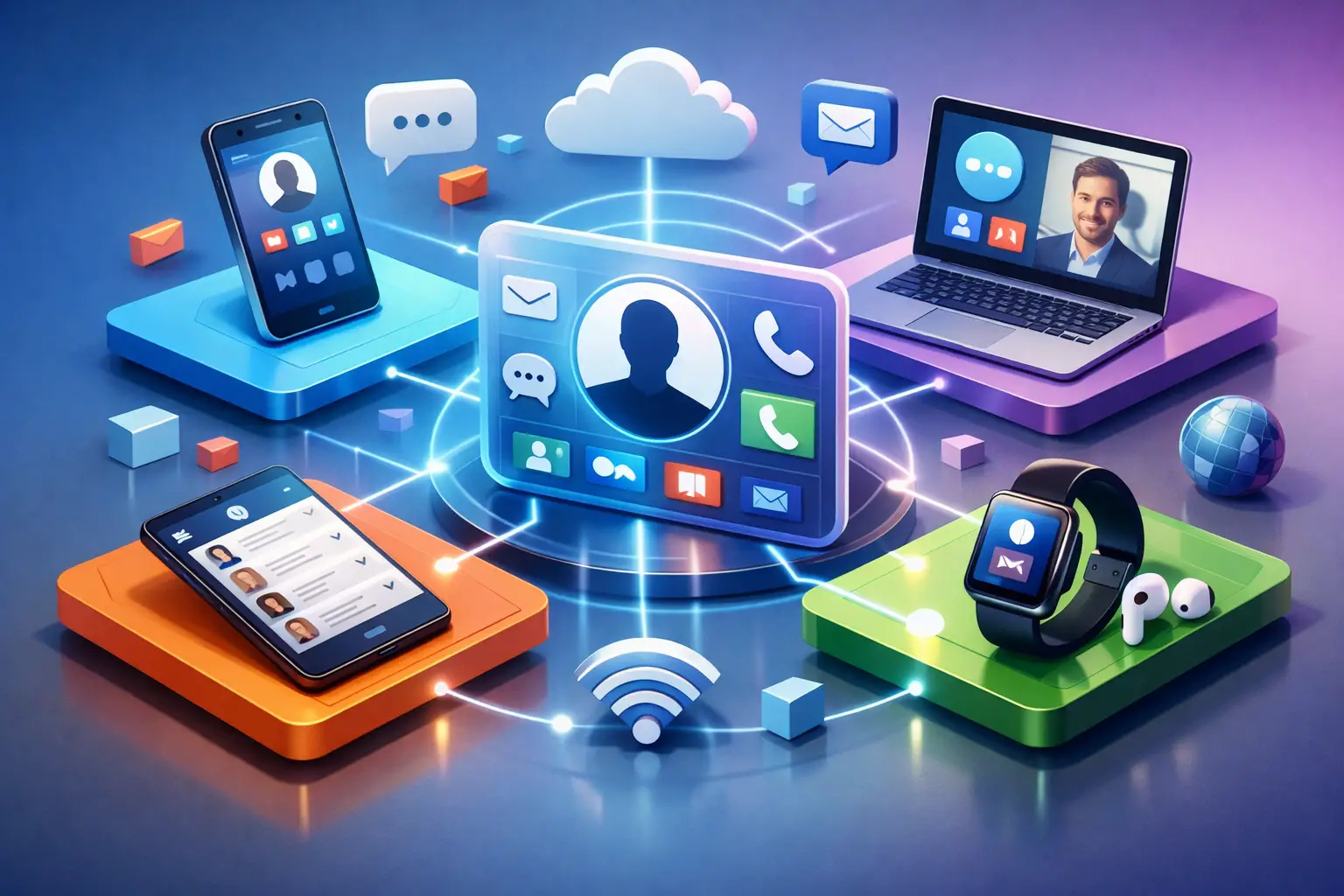
Someone scans your QR code at a conference, walks into your building, or lands on your profile from social media. What happens next matters. If they hit an outdated landing page, a dead link, or a messy list of contact options, the moment is gone. That is exactly why more teams are asking what is a digital contact hub and whether it is becoming the smarter replacement for static links, paper business cards, and disconnected touchpoints.
A digital contact hub is a centralized, live digital destination that brings together contact details, links, communication options, and business actions in one place. Instead of sending people to multiple tools or handing out information that goes stale, you give them one dynamic hub that can be updated anytime. The goal is simple: reduce friction and make every interaction easier to act on.
What is a digital contact hub in practical terms?
In practical use, a digital contact hub works like a smart layer between your business and the people trying to reach you. It can include your phone number, email, website, social channels, booking options, forms, maps, files, payment links, product pages, support access, and lead capture tools. The difference is that all of it lives inside one managed experience rather than being scattered across separate platforms.
That matters because contact is no longer just contact. A prospect may want to save your details, message your team, book a demo, share your profile internally, or scan a QR code and get immediate access in their own language. A digital contact hub supports those actions from one place and keeps the experience current.
or professionals, it can replace the old business card with a smarter digital identity. or businesses, it can turn a single QR code into customer support, reservations, reviews, and directions. or event teams, it can connect registration, attendee interaction, and lead capture. or office buildings, it can improve visitor communication, navigation, and tenant access without adding another disconnected app.
Why static contact sharing no longer works well
Most companies still share contact information the old way. A PD signature here, a paper card there, a link-in-bio tool for one audience, a booking page for another, and a separate event app or building portal somewhere else. It works until it doesn’t.
The first problem is fragmentation. When people have to choose between five different links, they often choose none. The second is maintenance. Static assets become outdated fast, especially when staff roles change, campaigns shift, or event details need real-time updates. The third is missed measurement. If your contact methods live everywhere, it becomes harder to understand which touchpoints actually create engagement.
A digital contact hub addresses those issues by centralizing the experience. You update one hub instead of chasing links across channels. You present a cleaner journey. You also gain a better view of how people interact after the first scan or click.
That said, not every organization needs the same setup. A solo consultant may need a polished digital profile with direct contact and scheduling. A conference organizer needs registration, participation, and exhibitor interactions. A property team needs communication tools tied to the building experience. The best hub is not the one with the most features. It is the one built for the context where contact happens.
The core features that define a digital contact hub
A real digital contact hub is more than a landing page with a few buttons. It is designed to support live engagement.
At the foundation is centralized identity. That means one destination that represents a person, team, brand, event, or location. Around that identity sits dynamic content - details you can change at any time without replacing the shared link or QR code.
The next layer is action. People should be able to do something immediately, whether that means calling, messaging, navigating, registering, booking, downloading, or submitting their information.
Then there is adaptability. A strong hub works across mobile and desktop, supports QR-based access, and reflects different use cases. In global or multilingual environments, automatic language detection can make a major difference because users do not need to search for the right version manually.
inally, there is measurement. If a hub is part of your lead generation or customer communication flow, you need visibility into engagement. Without that, it is just a prettier contact page.
Where digital contact hubs create the most value
The strongest use cases are the ones where speed, clarity, and first impressions directly affect outcomes.
or digital identity, a hub gives professionals and public-facing teams one premium place to share who they are and what action should happen next. A smart QR business card is a strong example because it removes the friction of exchanging paper cards and gives the other person a live profile instead of a static object. That profile can evolve over time without requiring a new print run or another introduction.
or events, a digital contact hub becomes a working layer for attendee engagement. Registration, exhibitor information, networking, real-time updates, and lead capture all benefit from being connected. This is especially useful when organizers want the simplicity of one platform instead of forcing attendees into a generic app with limited relevance.
or office buildings, the value is operational as much as brand-related. Visitors need directions, parking details, access instructions, and a direct line to the right office or tenant. Property managers need a cleaner communication channel. A digital hub can turn the building itself into a more responsive digital environment.
What a digital contact hub is not
It helps to be clear about what this category does not mean.
It is not just a digital business card, although it can include one. It is not just a link-in-bio page, although it may look similar on the surface. It is not a CRM, a website replacement, or a generic mobile app. Those tools all have their place.
The hub sits in a different role. It is the live access point people use when they meet your brand in motion - during networking, check-in, service, visits, campaigns, and real-world interactions. It should make the next step obvious and fast.
That distinction matters because companies sometimes buy the wrong tool for the job. A polished website can still be too slow or too broad for a quick interaction. A CRM may manage leads internally but does nothing for the person trying to connect with you externally. A digital contact hub solves the front-end access problem.
How to evaluate the right digital contact hub
If you are comparing options, start with the use case instead of the feature list. Ask where contact happens most often in your business. Is it face to face? Through QR codes? At events? Inside office buildings? On social channels? The answer should shape the hub.
Then look at update flexibility. If your information changes often, a static solution will create more work than value. Mobile usability should also be non-negotiable, since many interactions begin on a phone. If your audience is multilingual, language support should be built in rather than treated as an extra.
Integration matters too, but it depends on the workflow. vent teams may care about registration and attendee management. Sales teams may care more about lead capture. Property teams may need communication tied to specific locations. A generic tool can be enough for basic needs, but vertical-specific functionality usually creates better outcomes.
This is where platforms built around distinct business contexts stand out. OneContact, for example, approaches the category as a customizable digital hub rather than a one-size-fits-all app. That makes sense because a conference manager, a public figure, and a building operator do not need the same user journey.
The business case behind the shift
The reason digital contact hubs are gaining traction is straightforward. They improve conversion at the point of contact.
When people can act immediately, more of them do. When information stays current, fewer opportunities are lost to outdated details. When teams manage one live destination instead of multiple disconnected assets, operations get simpler. And when touchpoints become measurable, businesses can improve them over time.
There are trade-offs, of course. A hub still needs thoughtful setup. Too many actions can create clutter, and too little context can feel incomplete. The best results usually come from designing around one primary outcome and a few supporting actions, not trying to cram everything into one page.
If your business depends on introductions, visits, attendee engagement, or real-world interactions, the question is not whether people need your contact details. It is whether you are making those details useful at the exact moment interest appears.