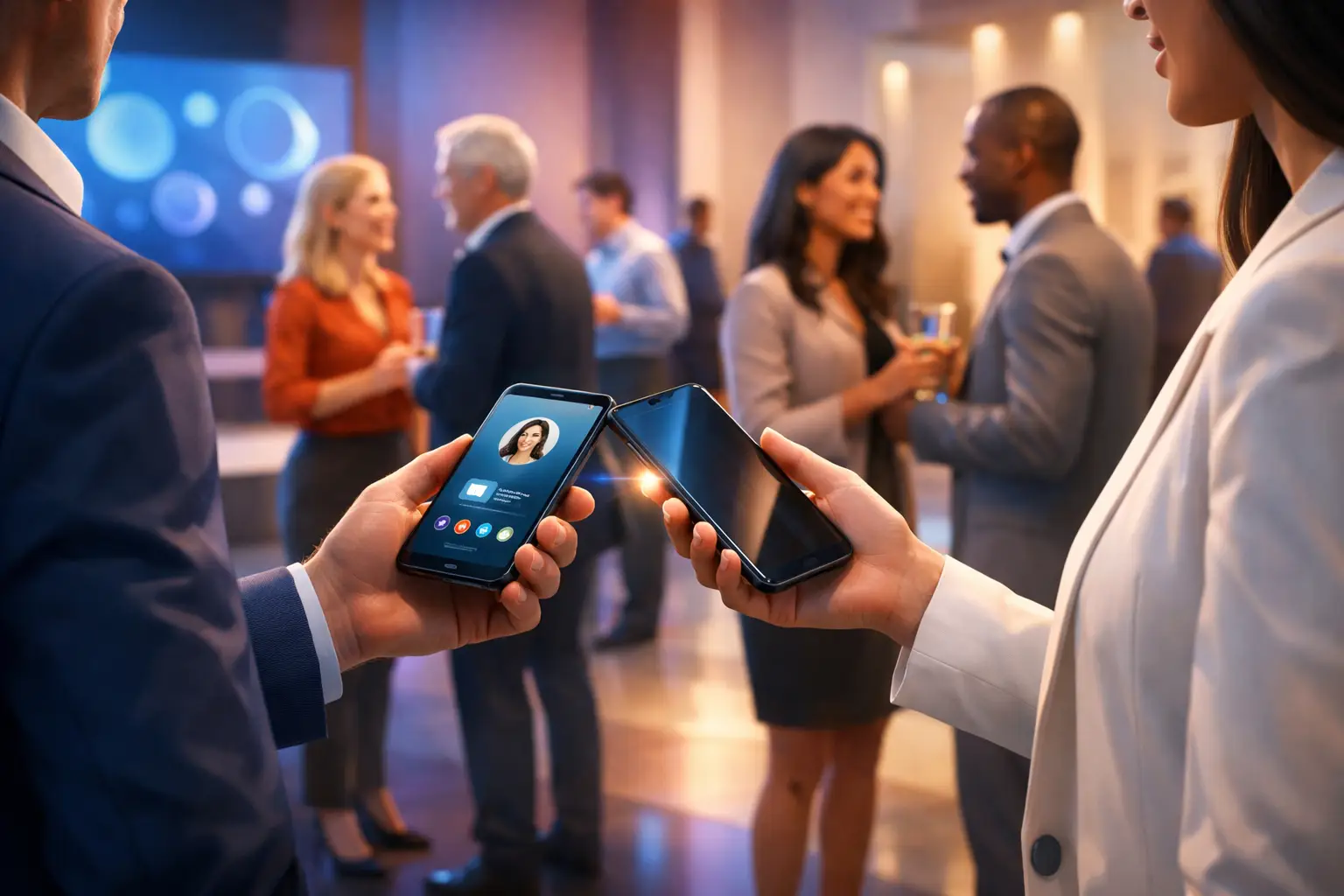
A badge scan at 10:14 a.m. should not turn into a lost lead by 4:00 p.m. Yet that is exactly what happens at many events. Attendees collect names they never revisit, exhibitors gather contacts they cannot qualify, and organizers are left measuring turnout instead of real business outcomes. A strong conference networking platform fixes that gap by turning every interaction into something usable, trackable, and easy to follow up on.
The problem is not that conferences lack opportunities. It is that most event tech stacks split those opportunities across too many tools. Registration lives in one system, messaging in another, lead capture in another, and networking often depends on whether people happen to meet in a hallway. That setup creates friction for everyone involved.
Why a conference networking platform matters now
Modern events are judged less by attendance and more by connection quality. Organizers need proof that the event created value. xhibitors need more than booth traffic - they need qualified conversations and clean data. Attendees want to meet relevant people quickly, without downloading three apps and filling out the same details twice.
That is where a conference networking platform earns its place. It should sit at the center of the event experience, not at the edge of it. When registration, attendee profiles, exhibitor visibility, meeting opportunities, and lead capture work together, networking stops being random and starts becoming intentional.
There is also a practical shift in audience behavior. People expect faster access, mobile-first interactions, and digital contact exchange that works instantly. Paper cards are easy to lose. Generic event apps often feel bloated and temporary. A platform built specifically for conferences should reduce steps, not add them.
What the best conference networking platform actually does
A lot of products promise engagement. ewer solve the operational details that make engagement happen.
At the organizer level, the platform should connect registration with live attendee data. That means people can enter the event, update their profiles, and start networking without repeating information. It also means organizers can segment audiences, surface relevant exhibitors, and understand which sessions or networking zones are creating the strongest activity.
or exhibitors, the platform should make lead capture immediate and structured. It is not enough to collect a name and email. Teams need context: who visited, when they engaged, what product they cared about, and whether follow-up should be urgent. If the system cannot support that workflow, sales teams will go back to spreadsheets after the event, and momentum disappears.
or attendees, the experience should feel simple. Relevant connections should be easy to find. Sharing details should take seconds. Messages, meeting coordination, and profile discovery should happen inside a clean interface that does not require technical effort. If networking feels like extra work, people will avoid it.
One platform beats disconnected event tools
The hidden cost of event technology is not always the software itself. It is the operational drag that comes from disconnected systems.
When organizers run registration in one tool, attendee engagement in another, and exhibitor lead capture in a third, they create avoidable blind spots. Data does not move cleanly. Teams spend time reconciling records. xhibitors leave without a complete picture of booth performance. Attendees get a fragmented experience.
A unified event system changes that. With a single environment for registration, participation, and attendee interaction, each touchpoint adds value to the next one. A registered attendee becomes a visible profile. A profile becomes a meeting opportunity. A booth interaction becomes a qualified lead. An organizer can measure not just attendance volume, but actual engagement patterns.
This is why many event teams are moving toward specialized conference solutions instead of patching together general-purpose apps. A purpose-built platform can support the full event journey more cleanly. If you are evaluating options, it makes sense to look at a dedicated solution for conferences and registration, such as OneContact's conference platform, especially if your event needs organizer tools, exhibitor workflows, and attendee networking in one place.
The features that create real networking outcomes
The right features depend on the type of event, but some capabilities matter almost every time.
Smart attendee profiles
A profile should be more than a name, title, and company. It should help people decide whether to connect. Industry, interests, role, goals, and relevant links all make networking more targeted. Better profiles create better conversations.
There is a balance here, though. Ask for too much information during registration and completion rates may drop. Ask for too little and matching becomes weak. The best platforms keep profile creation light at first, then encourage richer updates closer to the event.
ast digital contact exchange
Networking breaks down when sharing details takes too long. Digital identity tools solve this by letting attendees exchange live contact details instantly and accurately. That matters even more at large events, where speed is part of the experience.
A digital business card also improves follow-up quality because details stay current instead of going stale on a printed card. or teams that want a cleaner way to share professional identity before, during, and after an event, OneContact's digital card is relevant here.
xhibitor lead capture with context
Lead collection needs structure. A booth team should be able to capture a contact, tag the lead, add notes, and route follow-up without waiting until the show floor closes. This is where many platforms underperform. They capture data, but not sales intent.
The trade-off is that more detailed qualification can slow the booth team down if the interface is clunky. The best systems keep capture fast while giving sales teams enough detail to act quickly after the event.
Built-in multilingual accessibility
International events create another layer of complexity. Not every attendee is comfortable using the event experience in the same language, and that can limit discovery and interaction. Platforms that support automatic device-language detection and multilingual presentation reduce that barrier.
That is not just a convenience feature. It affects participation rates, exhibitor visibility, and how inclusive the event feels to global audiences.
Choosing a conference networking platform for your event model
Not every event needs the same setup. A one-day industry summit, a large trade show, and an executive leadership conference each have different networking patterns.
If your event depends heavily on sponsors and exhibitors, lead capture and visitor tracking should be a priority. If your audience is more peer-to-peer, attendee discovery and profile quality may matter more. If you run recurring conferences, data continuity across events becomes especially valuable because it helps you improve matching and outreach over time.
It also depends on adoption. A feature-rich platform is not useful if attendees ignore it. The best choice is often the one that asks the least from users while still giving organizers and exhibitors the data they need. asy onboarding beats flashy complexity.
Another point to consider is brand control. Generic event apps can make every conference feel the same. A customizable platform gives organizers more flexibility in how they present the event, guide users, and align the digital experience with the event's goals.
What organizers should ask before they commit
Before choosing any conference networking platform, ask a basic question: will this improve the quality of interactions, or just digitize existing chaos?
That question leads to better evaluation criteria. Can the platform support registration and networking in one flow? Can exhibitors capture and qualify leads without extra tools? Can attendees share details instantly and continue the conversation after the event? Can organizers measure meaningful engagement, not just app downloads or page views?
If the answer is unclear, the platform may create more admin work than value. vent technology should reduce friction at every touchpoint. It should help people meet faster, follow up better, and leave with measurable outcomes.