The problem usually shows up before the first session starts. Attendees arrive, scan a printed agenda, download an app they never open again, and struggle to figure out where to go, who to meet, and what matters to them. If you are asking how to modernize conference attendee engagement, the answer is not adding more tools. It is reducing friction across the entire attendee journey and making every interaction easier, faster, and more relevant.
Modern engagement is less about novelty and more about utility. People do not need another conference feature. They need a clearer way to register, navigate, connect, participate, and follow up. or event organizers and exhibitors, that shift matters because engagement is no longer judged by attendance alone. It is judged by participation quality, lead quality, and what continues after the event ends.
What modern attendee engagement actually looks like
A modern conference experience feels responsive. Information updates in real time. Networking does not depend on paper business cards or awkward manual contact swaps. Session access, exhibitor discovery, and attendee communication happen in one connected flow instead of across disconnected platforms.
That does not mean every conference needs the same setup. A leadership summit with curated meetings has different needs than a large trade event with multiple tracks and sponsor zones. But the direction is the same. Static event materials are being replaced by live digital touchpoints that can adapt during the event, not just before it.
This is where many organizers get stuck. They think modernization means launching a flashy event app with a long feature list. In practice, adoption is often weak when attendees are forced to download something generic for a two-day event. A better approach is to make engagement accessible instantly through simple digital access points such as registration flows, QR-enabled interactions, attendee profiles, live schedules, and exhibitor touchpoints that work on the device people already have in hand.
How to modernize conference attendee engagement without adding friction
The fastest way to improve engagement is to examine where attendees lose momentum. Usually, it happens in four places: check-in, schedule discovery, networking, and follow-up.
Check-in sets the tone. If registration is slow, unclear, or split across multiple systems, attendees start the event in a reactive mood. A modern setup brings registration, access, and attendee data into one place so event teams can manage arrivals efficiently and attendees can move forward quickly.
Schedule discovery is another weak point. Printed agendas go out of date fast, and standard event microsites often bury the details attendees actually need. Session changes, room updates, speaker swaps, and capacity issues all affect engagement. When the agenda is live and continuously updated, attendees trust it more and use it more.
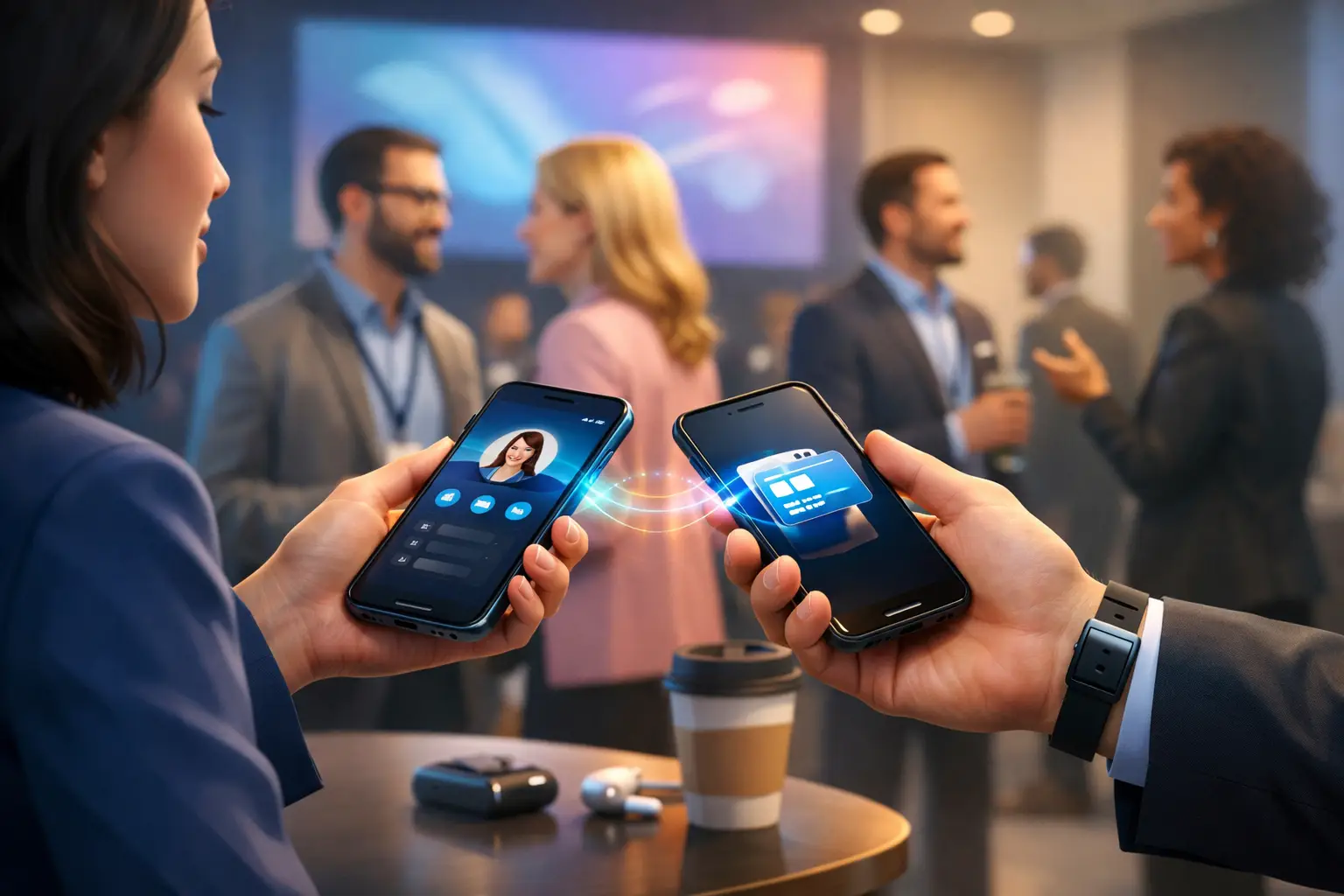
Networking is where many conferences still operate like it is 2012. People exchange paper cards, type names into notes apps, and promise to reconnect later. Most of those connections disappear. Modern networking works better when identity sharing is digital, instant, and tied to richer attendee or exhibitor profiles. Smart QR business cards and dynamic contact tools can make that shift practical, especially when exhibitors need direct lead capture instead of a stack of cards to sort after the event.
ollow-up is the final gap. If post-event communication depends on exported spreadsheets, scattered lead notes, or delayed outreach, engagement drops off quickly. A connected system helps organizers and exhibitors act while interest is still fresh.
The new baseline: connected experiences, not isolated features
Attendees now expect conference interactions to feel more like the rest of their digital life. They expect immediate access, clear communication, and personalized relevance. That changes the standard for event technology.
The strongest event experiences are built around a connected digital hub rather than isolated tools. Registration should connect to attendee profiles. Profiles should connect to networking. Networking should connect to exhibitor lead capture and post-event communication. If those pieces live in separate systems, teams spend more time reconciling data than improving the attendee experience.
or conference managers, this matters operationally as much as strategically. very disconnected tool creates extra admin work, more support issues, and less visibility into what attendees are actually doing. or exhibitors, disconnected systems make lead handling slower and less accurate. or attendees, the result is simple: confusion.
A unified platform changes that. It lets organizers deliver registration, participation, and attendee interaction in one environment, which is a much more practical way to modernize engagement than piling on standalone products. OneContact’s conference solution is built around that exact need, helping conference operators, exhibitors, and attendees interact through a single digital system instead of fragmented event tech.
Personalization matters, but only when it is useful
There is a lot of talk about personalization in events, and some of it is overdone. Attendees do not necessarily want a highly gamified experience or constant prompts. They want the event to feel relevant to their goals.
That means personalization should be tied to intent. A first-time attendee may need better orientation and navigation. A sponsor may need more qualified traffic to a booth. A speaker may need a smoother way to share session materials and connect after the talk. A buyer may want faster access to the right exhibitors. The best engagement systems support these different paths without forcing everyone into the same workflow.
Language accessibility is part of this too. If your event attracts international audiences, device-language detection and multilingual support can improve participation in a very practical way. People are more likely to engage when the information is clear from the first interaction.
Why exhibitors should be part of the engagement strategy
A lot of conferences separate attendee engagement from exhibitor performance, but they are closely linked. If attendees cannot easily discover exhibitors, save information, exchange details, and continue the conversation later, a major part of the event’s value gets lost.
This is one reason digital identity tools matter inside events. When an exhibitor can share a live digital profile instead of a static card or brochure, the interaction becomes easier to continue after the booth visit. Contact details, company information, product assets, and next steps can all stay current. That is more useful than handing out material that becomes outdated or forgotten.
or exhibitors focused on measurable outcomes, digital lead capture also creates a cleaner path into CRM workflows. But there is a trade-off. If the lead capture process feels heavy or intrusive, staff will avoid using it during busy booth traffic. The system has to be fast enough for real event conditions.
Data should improve the event, not just report on it
Another key part of how to modernize conference attendee engagement is changing how you use data. Too many event teams look at data only after the conference is over. That limits its value.
Real engagement data should help you adjust during the event. Which sessions are attracting interest? Where are attendees dropping off? Which exhibitors are getting scans or profile visits? Are attendees actually using the networking tools you invested in? Live visibility helps teams fix issues while they still matter.
That said, not every metric is equally valuable. High scan volume may look good, but if those interactions do not convert into qualified follow-up, the number is less meaningful. ocus on metrics tied to action: completed registrations, active participation, meaningful contact exchanges, exhibitor interactions, and follow-up readiness.
Modernization is a business decision, not just a tech decision
Conference engagement is often treated like a marketing layer. In reality, it affects operations, attendee satisfaction, sponsor value, and revenue outcomes. That is why modernization should start with business goals, not feature requests.
If your goal is better networking, build around easier identity sharing and connection capture. If your goal is smoother event flow, prioritize registration and live information updates. If your goal is stronger exhibitor ROI, make lead capture and post-event continuity central. The right setup depends on what your event is trying to achieve.
What does not work anymore is relying on static PDs, paper-heavy exchanges, and disconnected event systems, then hoping attendees will create their own momentum. They rarely do. ngagement improves when the experience is actively designed to reduce friction at every step.
The conferences that stand out now are not necessarily the ones with the most features. They are the ones that make it easy for people to participate, connect, and act while interest is high. Start there, and modernization stops being a buzzword and becomes a measurable advantage.