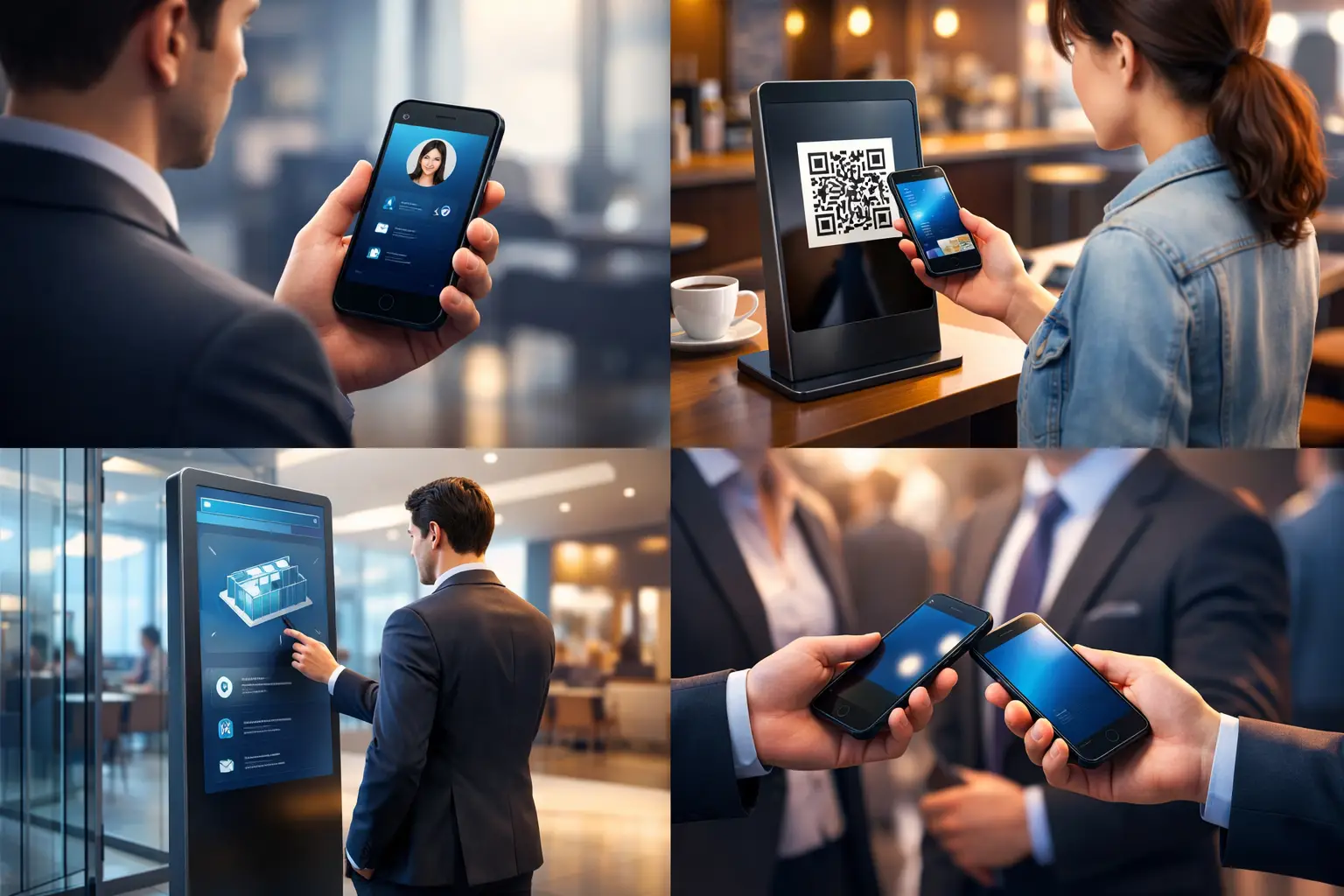
A sales rep leaves the company. A regional manager changes phone numbers. Marketing updates the logo. With paper cards, those changes stay in circulation for months. With digital business cards for teams, every update can be reflected immediately across the people who represent your business.
That shift matters more than it seems. Team business cards are not just contact tools. They sit at the intersection of brand control, lead capture, employee mobility, and customer experience. When every employee shares a different set of links, titles, formats, and outdated details, your company looks fragmented. When every card is dynamic, consistent, and easy to manage, each interaction becomes cleaner and easier to measure.
Why digital business cards for teams solve a bigger problem
Most companies do not struggle with business cards. They struggle with inconsistency.
One employee sends a vCard. Another shares a LinkedIn profile. A third texts a website URL and hopes the prospect finds the right page. None of these actions are wrong on their own, but together they create friction. The contact experience depends too much on individual habits instead of a company standard.
Digital business cards for teams create that standard without making every employee sound or look identical. The company can control the framework - branding, approved fields, links, disclaimers, and design - while still allowing each person to present their role, expertise, and contact options clearly.
This is especially useful in organizations with distributed teams, frequent staffing changes, multiple offices, or external-facing departments such as sales, leasing, partnerships, customer success, and event teams. In those environments, contact information changes often, and first impressions happen fast.
What teams actually need from a digital card system
A single digital card for one consultant is simple. A team-wide rollout is different.
At team level, the real question is not whether the card looks good. It is whether the business can manage cards centrally, keep them current, and use them as part of a broader engagement process. That means templates matter. Permissions matter. Analytics matter. Language support matters. QR usability matters.
If your team shares cards at conferences, in office lobbies, during field visits, or across international markets, the card needs to work in real conditions. It should open quickly, display clearly on any device, and give the recipient an obvious next action, whether that is saving a contact, booking a meeting, opening a product page, or sending a message.
This is where platforms built for business use pull ahead of generic profile tools. A team does not need a prettier link page. It needs an operational system.
The difference between individual cards and managed team deployment
Many tools are built for solo users. They work well until a company tries to issue cards to 20, 200, or 2,000 employees.
Once you scale, small issues become expensive. Manual setup takes time. Brand drift starts quickly. Offboarding gets messy. New hires wait too long for approved materials. If cards are tied to personal accounts, the business loses visibility and control.
Managed deployment changes that. Admins can create card structures in advance, assign them by department or role, and update key information without relying on each employee to make edits. That protects the brand, but it also protects revenue. Prospects should never reach a dead phone number or an outdated title after meeting your team.
or companies that want a practical digital identity solution rather than another disconnected tool, OneContact Digital Card is designed around live, customizable digital assets that can be managed across business use cases.
Where digital business cards for teams create the most value
The strongest use cases tend to be the most operational ones.
In sales organizations, digital cards shorten the gap between meeting someone and creating a qualified follow-up. A rep can share their details instantly, but also direct the buyer to a tailored page, product sheet, booking option, or messaging channel. That reduces drop-off after the first conversation.
At conferences and trade shows, speed matters even more. Teams on the floor need a fast way to exchange details without relying on paper stacks that disappear into bags. A smart QR card can connect networking to measurable lead capture and support a cleaner post-event workflow. or companies that also manage event interactions, OneContact Conference extends that logic across registration, attendee engagement, and exhibitor activity.
In office buildings and multi-tenant environments, digital identity also improves physical interactions. Visitors, brokers, tenant teams, and front-desk staff all need clear access to the right information. When digital cards connect into a broader workplace communication layer, they can support navigation, contact routing, and day-to-day convenience. That becomes even more relevant in mixed-use or high-traffic business locations, where OneContact Office Buildings supports a more connected tenant and visitor experience.
What to look for before you roll out a team solution
A polished interface is not enough. The right platform needs to fit how your organization operates.
Start with centralized management. If your marketing or operations team cannot control branding, create templates, and update data efficiently, the rollout will become hard to sustain. The second priority is flexibility. Different roles need different calls to action. A recruiter, account executive, property manager, and event representative should not all share the same structure.
You should also look closely at language support. If your employees interact with international customers, prospects, or visitors, cards that adapt to device language can remove a surprising amount of friction. It is a practical detail, not a flashy one, but it directly affects usability.
Analytics deserve attention too. Not every team needs deep reporting, but most businesses benefit from basic visibility into scans, views, and engagement patterns. Without that, digital cards stay decorative instead of useful.
The trade-offs companies should think through
Not every team needs the same level of sophistication.
A small firm with five employees may be fine with lightweight card sharing if brand control is not a concern. A larger company with multiple departments, compliance needs, or regional teams usually needs more structure from the start. The right answer depends on turnover, scale, and how often employees interact with external audiences.
There is also a balance between standardization and personalization. Too much control, and cards become generic. Too little, and the brand becomes inconsistent. The best systems set clear boundaries while leaving room for role-specific relevance.
Adoption matters as well. If the card is difficult to share or the update process feels cumbersome, employees will default to whatever is fastest. That is why ease of use should be treated as a business requirement, not a nice extra.
How to introduce digital business cards for teams successfully
The rollout should start with the teams that create the highest volume of external interactions. That usually means sales, business development, customer-facing operations, event staff, and leadership.
Build one approved template for each core use case instead of trying to create a universal card for everyone. Then define who manages updates, who approves structural changes, and what fields are required. This avoids the common problem where digital cards launch well but drift over time.
Training should be brief and practical. mployees need to know when to share the card, how to use the QR format in person, and what action they want the recipient to take next. If you make those moments clear, adoption tends to follow.
The smartest rollout treats the card as part of a connected engagement journey. Not just a digital replacement for paper, but a live business asset that keeps working after the first introduction.
Why this shift is becoming standard
Teams are already expected to work in real time. Static contact methods do not match that expectation anymore.
Companies update campaigns, org charts, phone numbers, offers, office instructions, and event messaging constantly. Their contact layer should be just as current. That is why digital business cards are moving from a nice-to-have tool to a practical standard for modern organizations.
When the system is built well, the benefit is simple: your team shares one live, branded, measurable identity instead of dozens of disconnected versions of your company.
That is a better experience for employees, a clearer experience for customers, and a smarter foundation for every introduction that is meant to go somewhere.