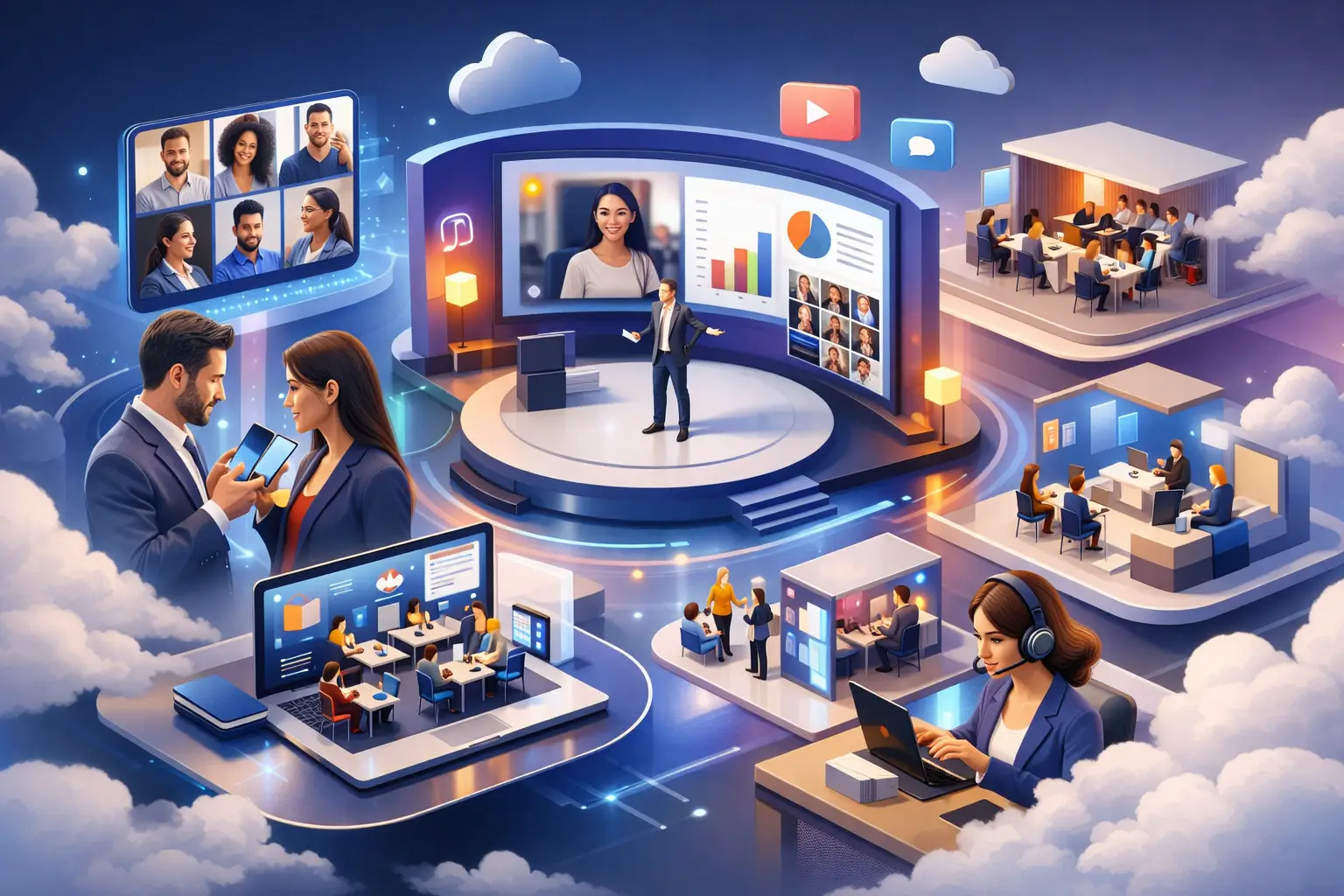
The drop-off usually starts before the event even begins. An attendee gets the registration email, sees they need to download yet another app, and decides to deal with it later. Later becomes never. That is exactly why a פלטפורמת כנס ללא אפליקציה is not a nice-to-have anymore. or many conferences, it is the difference between strong engagement and a half-used digital layer that nobody remembers to open.
or organizers, exhibitors, and sponsors, the issue is not whether event tech exists. The issue is adoption. If people do not use the tool, the feature list does not matter. A browser-based conference experience removes one of the biggest points of friction and makes participation easier from the first click.
What a פלטפורמת כנס ללא אפליקציה really changes
Most event apps fail for predictable reasons. They ask attendees to download something new, create another login, allow notifications, and learn a new interface for a two-day event. ven when the app is well designed, the user still needs motivation. At most conferences, that motivation is weak.
A no-app conference platform changes the starting point. Instead of asking people to install behavior, it meets them where they already are - on mobile browsers, desktop browsers, QR scans, email links, and text messages. The event becomes instantly accessible, which matters for busy executives, international guests, exhibitors working on the floor, and attendees who simply want directions, agenda details, or a way to connect.
This shift has a direct business effect. More people actually access the agenda. More people find exhibitors. More leads get captured because the path is shorter. More updates get seen because there is no dependency on whether an app was installed in the first place.
Why event organizers are moving away from app-first thinking
App-first thinking made sense when conferences wanted to prove they were digital. Today, buyers are more practical. They want technology that gets used.
or organizers, a browser-based platform usually improves adoption because access is immediate. A registration confirmation can lead directly into the event hub. A QR code at the venue can open maps, schedules, speaker pages, and session changes on the spot. No app store. No storage issue. No security hesitation from attendees who avoid downloading unfamiliar tools onto company-managed devices.
There is also an operational advantage. When the platform is centralized, event teams can update content in real time without worrying about whether users downloaded the latest app version or enabled the right permissions. That matters when rooms change, sessions run late, or sponsor placements need to go live fast.
or international conferences, the benefit is even stronger. If the platform supports automatic device-language detection and multilingual delivery, attendees move through the event with less confusion and fewer support requests. That is not just a convenience feature. It improves the event experience at scale.
xhibitors care about lead quality, not app downloads
xhibitors are usually blunt about what they want from event technology. They want qualified conversations, fast lead capture, and a reliable way to follow up after the show.
A פלטפורמת כנס ללא אפליקציה supports that better than many traditional event apps because it reduces the number of steps between interest and action. A visitor scans a QR code at the booth, opens the exhibitor profile instantly, shares details, requests materials, or starts a chat without installing anything. That means fewer lost opportunities and less dependence on a rushed badge scan at the end of the conversation.
It also gives exhibitors more flexibility in how they present themselves. Product videos, brochures, team contacts, meeting requests, and CRM-connected lead forms can all live in one place. Instead of handing out static material, they can guide attendees into a live digital touchpoint that stays updated after the event.
This is where a platform approach beats disconnected tools. When registration, attendee interaction, exhibitor presence, and lead capture sit inside one system, the data is more usable and the workflow is easier to manage. OneContact is built around that exact logic for conferences and events, giving organizers and exhibitors one digital environment instead of a patchwork of event tools.
Attendees want speed, clarity, and zero friction
Attendees are not evaluating your event technology with a procurement mindset. They are asking simpler questions. Where do I go? What session starts next? How do I message this exhibitor? How do I save this contact? Where is the updated room assignment?
If those answers require an app install, account setup, and a search through menus, many users will stop halfway. If those answers open directly from a mobile browser, usage rises naturally.
That does not mean an app never has value. or some large communities with year-round engagement, heavy networking features, or ongoing member programs, a dedicated app can still make sense. But many conferences are short-cycle experiences. They need high utility over a limited time window. In that case, less friction usually beats more functionality.
That trade-off matters. A smaller set of features that people actually use is more valuable than a larger set of features that most attendees ignore.
What to look for in a no-app conference platform
Not every browser-based solution is strong enough for a serious event. Some are little more than mobile landing pages dressed up as event tech. The right platform should handle the full attendee journey, not just one touchpoint.
Start with registration and access. The event experience should begin at sign-up and continue into check-in, agenda browsing, speaker discovery, and exhibitor interaction without forcing users into separate systems. If registration lives in one tool and engagement in another, friction comes back fast.
Next, look at live updates. Conferences change in real time. Your platform should let organizers update schedules, content blocks, and communication instantly. Static pages are not enough.
Then evaluate exhibitor value. Can exhibitors capture leads, present digital materials, and create measurable interactions from the booth? If not, the platform may help attendees but still underdeliver for sponsors.
inally, think about usability under real event conditions. Venue Wi-i can be inconsistent. Attendees are distracted. Staff are under pressure. The platform has to be simple enough to work in those conditions, not just in a sales demo.
The business case is stronger than it looks
A no-app model is often framed as a user-experience decision, but it is also a commercial one.
irst, it can improve conversion from registration to actual platform usage. That increases the value of the event’s digital assets, sponsor visibility, and communication channels. Second, it can reduce support pressure. ewer download issues and login barriers mean fewer last-minute problems for the event team.
Third, it can improve post-event continuity. When attendee and exhibitor touchpoints are web-based and dynamic, the event does not disappear when the app becomes irrelevant. Profiles, materials, follow-up forms, and contact points can remain active after the conference ends. That extends the value window for both organizers and exhibitors.
This matters because many events still operate with a short-term mindset. They invest heavily in event-day logistics and then lose momentum the moment the venue clears out. A browser-based digital hub helps preserve the relationships created during the event instead of treating them as one-time interactions.
When פלטפורמת כנס ללא אפליקציה is the better choice
If your audience includes corporate attendees, international visitors, exhibitors focused on lead generation, or guests who are unlikely to install a single-use app, a no-app model is often the smarter choice. It is especially effective for trade shows, professional conferences, business networking events, and multi-stakeholder events where speed matters more than novelty.
If your event depends on year-round engagement, private community access, or advanced device-based features, the answer may be less absolute. In some cases, a hybrid model works. But for most organizations trying to increase participation and reduce friction, the simplest path wins.
The practical question is not whether an app sounds more advanced. It is whether your audience will use it. If the goal is better interaction, stronger lead capture, and easier event communication, a פלטפורמת כנס ללא אפליקציה is often the more effective option.