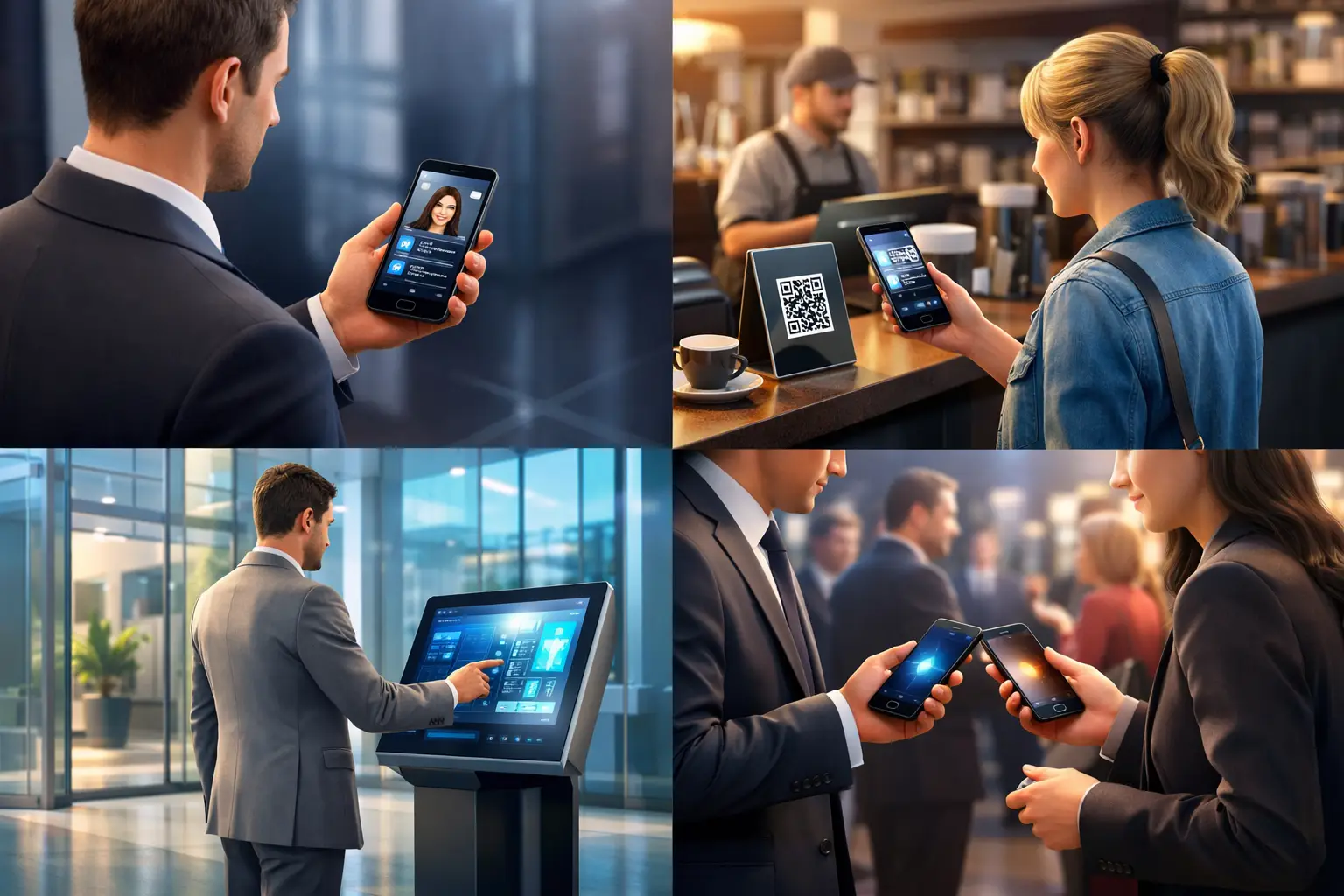
A printed sign that sends people to an outdated website is more than a small annoyance - it is a missed conversion. That is why business QR hub benefits are getting real attention from companies that care about speed, visibility, and measurable customer action. A good QR hub does not just open a link. It gives customers, visitors, and prospects one clear path to the right action at the right moment.
or businesses that deal with walk-ins, appointments, events, office traffic, or sales conversations, that shift matters. Instead of asking people to search, type, download, or wait, a QR hub removes friction and keeps the experience current even after the code is printed or displayed.
What business QR hub benefits look like in practice
The biggest advantage is not the QR code itself. It is the live destination behind it. Traditional QR use is often limited to a single static page. That works until your hours change, your campaign ends, your booking link moves, or your team wants to promote something new.
A business QR hub solves that by turning one scan into a live business touchpoint. The destination can include contact options, scheduling, navigation, promotions, lead forms, support channels, reviews, payment links, and branded content, all managed from one place. That means the same printed code can stay useful much longer while the business updates the digital experience in real time.
This is especially valuable for companies with multiple audiences. A restaurant may want reservations, directions, and menu access. A clinic may need intake forms, call routing, and appointment booking. A real estate office may want listing links, agent contact details, and office location support. The hub keeps those actions organized instead of forcing people through scattered links.
aster customer action with less drop-off
very extra step reduces response. If customers have to search your business name, open a browser, find the right page, and then decide what to do next, some of them will leave before taking action. A QR hub shortens that path.
When someone scans in front of your storefront, at a service counter, inside a building lobby, or at an event booth, intent is already high. The job is to convert that intent quickly. A well-built hub can send them straight to booking, chat, directions, a digital profile, or a lead form without forcing them through a generic homepage.
That speed creates practical gains. Customer service teams spend less time answering simple location or access questions. Sales teams capture more qualified interest while attention is still fresh. ront desk staff deal with fewer repetitive requests. The result is not only convenience for the user, but also a more efficient operation for the business.
Live updates without reprinting everything
This is one of the most overlooked business QR hub benefits. Physical materials are slow to change. Window decals, tabletop signs, event banners, brochures, packaging, badges, and office displays all cost time and money to replace.
With a dynamic QR hub, the code stays the same while the destination changes. You can update campaigns, switch contact details, rotate offers, add seasonal messaging, and redirect traffic based on current priorities. That flexibility matters for growing businesses because digital operations change faster than print cycles.
It also reduces risk. If an employee leaves, a page URL changes, or a landing page underperforms, you do not need to scrap existing materials. You update the hub and keep moving. or organizations managing many locations or teams, that can save a surprising amount of administrative work.
A better fit for events, offices, and in-person engagement
Not every business uses QR codes the same way, and that is where many tools fall short. A basic QR generator is fine for one-off links. It is less useful when you need a structured, branded experience across multiple real-world touchpoints.
At conferences and trade shows, for example, the goal is usually lead capture and continued interaction. A QR hub can give attendees instant access to company details, product information, contact sharing, meeting requests, and post-event follow-up. or organizers, it can support registration, participation, and attendee interaction in a single digital flow. Companies handling event engagement at scale often need more than a simple landing page, which is why purpose-built platforms like OneContact's conference solution are easier to operationalize.
In office buildings, the use case changes again. Visitors may need parking instructions, floor navigation, office directories, tenant communication, or direct contact with reception. A hub works best when it supports the building experience, not just marketing. In that setting, a centralized digital layer can reduce confusion and improve arrival flow. That is the strength of a tailored office-building solution like OneContact's building platform.
Better brand control than scattered links
Many businesses still share a mix of website URLs, social profiles, booking pages, map links, and messaging apps with no consistency. That creates a fragmented impression. A QR hub brings those actions into one branded environment.
This matters because people make judgments quickly. If the scan experience looks disconnected or outdated, trust drops. If it looks organized, current, and easy to use, professionalism goes up. The hub becomes part of the brand experience, not just a shortcut.
or professionals, executives, and client-facing teams, this is especially relevant. A smart digital identity can replace static contact sharing with a live profile that stays updated across meetings, networking, and outreach. Instead of handing out information that goes stale, teams can share one dynamic destination. or businesses focused on digital identity and smart QR business cards, OneContact's digital card platform is designed for exactly that shift.
Useful analytics, not just more traffic
A QR hub should do more than generate scans. The real value is understanding what happens next. Which location drives the most engagement? Which call to action gets tapped most often? Are customers trying to call, book, navigate, or message? Those signals help businesses improve both marketing and operations.
This is where the difference between vanity metrics and action becomes clear. More scans are nice. Better outcomes matter more. If a hub shows that one in-store display produces bookings while another mostly leads to support requests, you can adjust placement, messaging, and staffing. If an event booth sees strong scans but weak follow-up, the problem may be the destination, not the traffic.
That said, analytics only help if the business is ready to use them. A small company with one location may need simple visibility. A larger organization with multiple teams may need segmented reporting and campaign control. The right setup depends on how much optimization the business is prepared to do.
Multilingual access can quietly improve conversion
or businesses serving mixed audiences, language friction is a hidden conversion problem. A person scans with intent, lands on a page in the wrong language, and leaves. That is not a traffic issue. It is an experience issue.
A QR hub that supports device-language detection and translation can remove that obstacle immediately. or businesses in hospitality, real estate, healthcare access, events, and international commerce, this is a practical advantage, not a nice extra. It helps the first interaction feel relevant without forcing users to search for language settings or alternate pages.
This benefit is easy to underestimate until you operate in multilingual environments. Then it becomes one of the clearest ways to improve accessibility and reduce drop-off.
The trade-off: a QR hub works best when the destination is well designed
A QR hub is not a shortcut around weak messaging. If the experience behind the scan is cluttered, slow, or unclear, the code will not fix the problem. Businesses still need strong calls to action, logical page structure, and a clear idea of what they want the user to do.
There is also a difference between using QR codes everywhere and using them where intent is highest. A table sign, front entrance, booth display, building lobby, product insert, or business card can make perfect sense. A random code placed without context usually does not. The best results come from matching the hub to a real moment of need.
That is why the most effective approach is not to ask, "Should we use QR codes?" It is to ask, "Where are people already ready to act, and what is the fastest helpful response we can offer?"